Small things 5: Tan


Tan


I will be the white half and half to your black, iced coffee.  At first, when I pour myself into you, I am like an upside down tree and then light a slice of marble pound cake. 


Nevertheless, with a little swirling of the clear, plastic cup, and some help from a wooden stirrer, we become tan, like the color of your neck, which spent many summers under the sun alone.


Blitzen Trapper

At Muddy Waters Café, Monday, December 1.


Thursday, December 4, 2008

Photograph by Larry Mills

Blitzen Trapper’s Eric Earley (left) and Marty Marquis (right) led the Portland-based band through a set of folk-tinged rock-outs on Monday night at Muddy Waters Café.

Blitzen Trapper are an experimental folk band from Portland, Oregon, and on Monday night they managed quite a feat — filling a club to near capacity on a school night. Their sound is steeped in 1960s and ’70s rock ’n’ roll, evoking thoughts of a post-electric Bob Dylan hitting the stage with the Doobie Brothers, and featuring a guitarist mentored by Jimi Hendrix.

I went into the evening expecting revivalist tunes aplenty, but the band’s atmospheric, experimental guitar licks caught me delightfully off-guard. Starting off their set with “Sleepy Time in the Western World,” the upbeat opening track off their latest album, Trapper filled the coffeehouse with the pounding sounds of old-school organ and driving guitar riffs.

Other highlights included the record’s title track, “Furr,” which started off slow and soft, with lead singer Eric Earley’s voice accompanied only by an acoustic guitar. But in between the verses, the whole band came roaring in, as Earley’s harmonica fought loud and strong against the fast beat they created. As the band dropped out, Earley’s sweet voice purred back in, crafting a whimsical fable about transforming from man to wolf to man again. The song embodied a perfect combination of Trapper’s folk and rock elements; quiet enough during the verses to hear the complex, poetic lyrics (one of their greatest strengths), but upbeat enough during the interludes to keep everyone’s feet stomping.

“Saturday Nite” was another short and sweet standout in which classic guitar and electro-pop synth riffs dueled against each other, as if lodging a battle over what era Trapper’s music would fall into, 1960 or 2008. As Earley’s voice came back in, though, it was clear that the quarrel would end in a stalemate.

The band pulled a great crowd from Santa Barbara’s folk and rock lovers both young and old on Monday. Flannel jackets and artistic beards peppered the crowd, as did the graying heads and Dockers, indicating just how wide-reaching and timeless the band’s sound really is. Trapper’s music is evocative of the outdoors, partly because nearly all of their lyrics have some reference to the woods, hills, wind, or some other natural beauty. But their instrumentation and arrangements seem to suggest something natural, too. Throughout the show, one couldn’t help but want to see Trapper doing their thing at some intimate outdoor fest, rocking out with the wind in their already-mussed hair. But in the meantime, they had no problem fitting into the funky atmosphere of Muddy Waters on Monday — they could have used just a wee bit more elbowroom to do it.

Jack’s Mannequin. At UCSB’s The Hub, Thursday, October 30.

Orange County Piano Rockers Start Halloween off Right


Monday, November 3, 2008
After two solid performances by openers Treaty of Paris and Eric Hutchinson, Jack’s Mannequin took the stage on Thursday night at The Hub. A bearded Andrew McMahon (Jack’s lead singer and songwriter) sauntered over to his piano wearing an old green t-shirt, his hair long, and tied in a ponytail. McMahon offered a clear-eyed smile to the crowd, made up mostly of costume-clad UCSB students, before the house lights went down and the band launched into “Crashing,” off the recently released Glass Passenger. It didn’t take long for the place to respond, as the audience immediately began jumping and dancing at the song’s opening lines of “I want to hear some music.”

The stage could barely hold McMahon’s exuberance. He spent his set riding the piano bench like a mechanical bull, then skipping laps around the stage. At the end of the song, he proudly assumed a Statue of Liberty pose, hoisting his mike like a flame of truth.

McMahon sings like he’s telling you something which could change your life — like he’s relaying information that changed his life. But only once did Thursday’s performance directly allude to the singer’s recent bout with cancer. During his solemn performance of “Caves” he belted lyrics like, “I’m caught somewhere in between alive and living a dream.”

An avid between-song talker, McMahon jokingly questioned the pre-Halloween Isla Vista revelers with questions, feigning mad professor obsession when he begged, “You know the best house to play beer pong? Tell me now! I must know.” He then apologized, saying, “We’ve gotten the crowd all riled up right before one of our softest songs” before launching into the emotional “Hammers and Strings (A Lullaby).”

A few songs into the set, guitarist Bobby Anderson played the opening chords to “The Mixed Tape,” off of the band’s debut album, 2005’s Everything in Transit. The crowd erupted at the sound, causing even the girls in back of the beer garden to jump up and down. It was during this sonic throwback that nearly every member of the audience seemed to be singing along, holding their hands on their hearts as if they’d been pierced by something — perhaps feeling understood by a 26-year-old man who plays a mean piano.

I’m in the Independent!

Dude check it out!  They wrote a little blurb about me.  Isn’t that cool.  It showed up in the table of contents this month.  I’m honored :)

Paul Wellman

Joe Bunting


Joe Bunting


Thursday, November 13, 2008
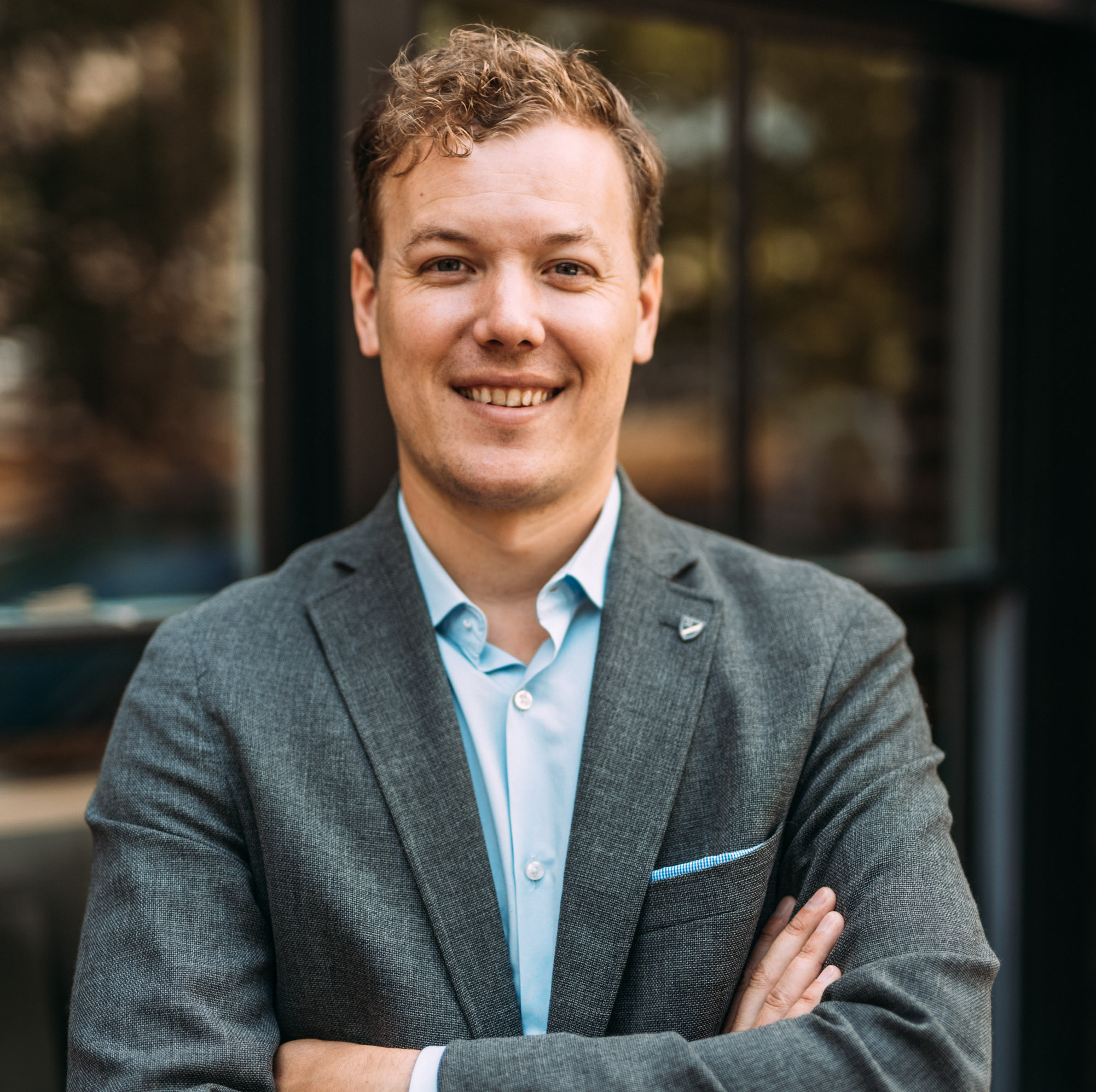
NOT-SO-AVERAGE JOE: When wide-eyed Westmont grad Joe Bunting wandered into The Indy’s offices a few months ago, we thought two things: “He’s so nice” and “Why does he want to work here?” A few assignments later, we realized even nice guys can have a critical eye. And though Joe has only had a small bit of formal training (“I worked on my high school’s paper, but gave it up after the journalism teacher yelled at me for writing an editorial about ‘sophomoritis.’ I thought it was really funny. He thought I was trying to make fun of people.”), his enthusiasm has more than made up for his inexperience. Aside from arts writing – he contributed reviews of Shiny Toy Guns and Improvability (pg. 64) this week – Joe is eager to try his hand at all aspects of reporting. “I really like the idea of being a conduit,” Joe said of the journalistic process. “I take in information, art, music, and people’s stories, and then transcribe them in another form for others. Being a part of the flow of information and story is a powerful experience.”

Improvability at Isla Vista’s Embarcadero Hall

A Review of Improvability at Isla Vista’s Embarcadero Hall, Friday, November 7.


Thursday, November 13, 2008

By Joe Bunting

On Friday night, Improvability’s cast of six played 12 different improvised games, and all this variety packed into a little over an hour kept the show moving at a high speed and hilarious pace. One game was called “The Play.” First, a member of the cast transformed into a prima donna theater director with a German accent who was putting on a play called The Taco Bell Dog. When it began as a boring play with a stupid plot, the director yelled, “Stop the play!” and berated one of the actors, shouting, “You, were you trying to do a New York accent? It was terrible.” She then told her to be the best New Yorker possible—Barbara Streisand. Speaking to the second actor, she said to focus on the noise coming from the front row, where laughing kids from a local school were seated. The third actor was told to do exactly what he was doing.

What came next was a scene in which the same lines were repeated precisely, but with the second actor jumping off the stage and screaming at the little kids in the front row, who laughed even harder with all the attention. The Streisand character said her lines pompously, but was impossible to understand because her New York accent turned to gibberish, and the third actor did exactly what he was doing the first time. The result was a hilarious jumble of activity, made especially sweet by the addition of the explosive laughter of little kids.

In another game called “Vacation Pics,” the cast created a real-life slideshow out of the narrator’s vacation to the mythical realm of Candyland. In the last game, the cast re-created some personal stories. One traveler even recounted a train ride through Eastern Europe that included a witch, a wizard, and flying monkeys. It was strange, but funny. Later in the same game, when the troupe acted out an Isla Vista party, an actor playing 3rd District Supervisor candidate Doreen Farr made a surprise guest appearance. It’s not every day you see accurate impressions of Santa Barbara celebrities.

For the most part, the crew kept the show clean for the sake of the kids, despite the disturbing efforts of a loud group of revelers in the back. Generally speaking, improv is notorious for its dirty jokes, and you would certainly expect nothing less of an improv group based in I.V., but Friday’s show was inexpensive, fun, and (relatively) family-friendly.

Indy Article: Shiny Toy Guns Review

Shiny Toy Guns at Velvet Jones

Electro-Rockers Play Solid Show to Sleepy Crowd


Thursday, November 13, 2008

By Joe Bunting

Shiny Toy Guns didn’t get onstage at Velvet Jones last Sunday night until after midnight, causing more than a few audience members to get a little feisty. For many, the band’s tardiness was a show killer. But for others, the L.A.-based electro rockers delivered a show well worth the time spent waiting for it.

Shiny Toy Guns vocalist/guitarist Gregori Chad Petree wails his way through a solid set of hits and misses during the band’s Sunday night show at Velvet Jones.

With fog filling the stage, the band emerged with strobes flashing to the music and lighting the foursome into eerie silhouettes. A single big chord sounded from the synths and Gregori Petre’s guitar made itself known with a heavy note, cuing the start of a space-age sonic intro that set the stage for this emerging alt-rock-meets-electronica outfit.

Velvet Jones was one of the first stops on Shiny Toy Guns’ current tour in support of Season of Poison, the band’s second album. And in the course of the night they made their way though about half of the album, including their most recent charting single, “Ricochet!”

This is also new vocalist Sisely Treasure’s first tour with the band since replacing Carah Charnow back in August. Treasure is known for her short-lived stint on TV’s Pussycat Dolls Present: Girlicious reality show, and the group Cooler Kids, which charted with their house song, “All Around the World” back in 2003.

Treasure has the voice to capture the bratty female vocals that make songs like “Le Disko” and “Ghost Town” what they are, but the necessary attitude to pull them off successfully was barely discernable. That said, by the time the Guns played “Ghost Town” (about halfway through their set), the crowd had ironically thinned to about half, and Treasure seemed to be straining to pump up the tapering audience.

She succeeded to an extent, and there were noticeably more hands raised and heads bouncing by the time the band offered up “Ricochet!” However, there was no moshing or full on dancing to be seen; a shame for a band who’s 2006 album, We Are Pilots, was nominated for a Grammy for best Electronic/Dance Album.

The band skipped the encore theatrics, playing straight through their set as if they knew the tired and tattered audience might not ask them back. A few members of the crowd even took advantage of the extra space during Pilot’s hit, “You Are the One,” to get down and dance along.

In the end, the enthusiasts were denied a second round of songs and the house lights revealed a less-than-stellar turnout, but the tunes themselves still managed to deliver. Sadly, there just weren’t enough night owls out to appreciate it.

Indy Article: Cross-Cultural Reconciliation

This article which published on The Independent’s website today.  Special thanks to the Kashmiris (Dauood, Bazmi, Hamid, and Tahir) who let me chat with them about their country, to Father Brian, and to Leslie Smith, secretary of Christ the King, who endured several phone calls a day as I was working on it.  

Cross-Cultural Reconciliation

Residents of Kashmir Mend Christian-Muslim Relations in Santa Barbara


Saturday, November 1, 2008

Before coming to stay at his host’s home in Montecito, Iftikhar Bazmi’s application for a visa to visit the United States was sent through the Visa Viper process, an elaborate security test to check visitors for connections to terrorists. When contrasted against what motivated him to travel, however, the fact that the U.S. would be apprehensive toward allowing him onto American soil might seem somewhat ironic.

Nine citizens of Kashmir, the hotly contested region between India and Pakistan, came to Santa Barbara. Their purpose was twofold: First, to train from October 9-11 in faith-based reconciliation withFather Brian Cox, the creator of the National Reconciliation Seminar program, which has been implemented in areas of conflict like the Sudan, Syria, and Kashmir, and second, to give a reconciliation seminar as part of that training on healing relations between Muslims and Christians. The seminar consisted of presentation on the core values of faith-based reconciliation — listening skills and negotiation skills, for example — as well as group discussions and lectures given by various groups, including Cox’s church, the Friendship Missionary Baptist church, and the Kashmiris themselves.

The Kashmiris’ visit was arranged by Cox, who is also rector ofChrist the King Episcopal Church in Santa Barbara and senior vice president of the Washington, D.C.-based International Center for Religion and Diplomacy.


Members of Christ the King Episcopal Church stand alongside nine Kashmiris who traveled to Santa Barbara to encourage better relations between Muslims and Christians.

Along with the Kashmiris was Bazmi — who had also been cleared by the Department of Homeland Security — as well as a diverse group of religious leaders from all three regions of Kashmir, including Muslims, Hindus, a Christian, and a Buddhist. Bazmi’s file had been passed from the U.S. Embassy in New Delhi, India, to Homeland Security in Washington, D.C. Cox said such a scenario was likely, because Bazmi, who practices law in the High Court of Kashmir, has an Iranian passport stamp; and, with the United States’ tense relationship with Iran, the agencies were being careful. It probably had nothing to do with the fact he was a Muslim, Cox noted.

According to Dr. Dauood Iqbal Baba, a professor of history atUniversity of Jammu in Kashmir, “The [American] general public feels that Muslims are their enemies and every Muslim is a militant; a terrorist. It’s not true. So by meeting us, they understand it’s not true. It’s a negative picture which some people have projected about Muslims here and vice versa.”

“What Osama bin Laden did on 9/11 was his own act,” Bazmi said, motioning in the air with a jeweled hand. ”It was not an act of Islam. It was his own.” However, many Americans are still skeptical of Bazmi’s sentiment — including Cox, who is a peacemaker but also a rationalist.

“There are two major forces shaping the world today,” Cox claimed. “One is what you’d call American primacy, the idea that America should share its values with the world.” The other is Global Jihad, he says, echoing political scientist Samuel Huntington, author of The Clash of Civilizations and the Remaking of World Order, which claims that clashing cultural and religious identities between the Islamic and Western worlds will one day cause a major global conflict, and eventually eradicate one side.

The world is littered with the collision of governments and religion, few as complicated as the conflict in Kashmir — as the Kashmiri visitors would be quick to remind us.

When asked what the conflict in Kashmir is really about, Bazmi started from its earliest origins: “First, it begins in 1846, when the Maharaja sold Kashmir for an inferior sum.” In 1947, the British left, he continued, dividing Pakistan and India. According to a United Nations resolution, “The Kashmiris were supposed to be given the chance to choose what they want because of 1947,” explained Dr. Hamid Naseem Rafiabadi, author of several books, including Saints and Saviors of Islam, “but they were never asked.”

And, according to Bazmi, the people of Kashmir don’t want to ally themselves with anyone. “They don’t want to go with India. They don’t want to go with Pakistan. They want their separate state,” he explained. Consequently, the region has become the victim of a political tug-of-war between the two nuclear powers ever since.

Faith-based reconciliation may be part of the solution to ending Kashmir’s woes as it brings people together on the basis of common religious concepts including justice and forgiveness. While most politicians skirt religion for its capacity to create division, Cox and the Kashmiri leaders see it as means to heal centuries’ worth of wounds.

Before faith-based reconciliation was introduced by Cox in 2002, the relationship between Kashmiri Muslims and Kashmiri Hindus ranged from unawareness of each other’s existence to fear.

“There was no communication,” says Rafiabadi. “On what terms could we talk? If we talked about the political situation, Hindus had opinions, Muslims had their opinions. No one agreed.” Faith-based reconciliation changed that, Rafiabadi said, providing a framework for communication.

“It was a framework and we lacked that,” Rafidabadi said. “We find that it is the best way to achieve at least understanding with our friends who have become estranged from us because of politics. It is not because of faith but because of politics.”

“Kashmiris have become more serious about their religious traditions,” said Cox, but as someone who has worked on disputes involving other faith traditions for 20 years, “because our goal with them was not conversion but transformation.”

In Santa Barbara, Baba says they have been transformed.

Although he has participated in faith-based reconciliation seminars from the beginning in 2002, Dr. Baba says, “The way I’ve been transformed this time is altogether different because it gives me a reason to love Americans and Christians. What the media is doing is totally playing a very negative role for the world. It is only portraying a negative picture of the world. Ninety percent of people in my area know that America — the people of America — hate Muslims, but when we attended the seminar; it’s totally different. The way the people have treated us, the way they have loved us, it’s totally different.”

  1. Get updates sent to your email

    Enter your Email


    Preview
  2. Posts from back in the day: